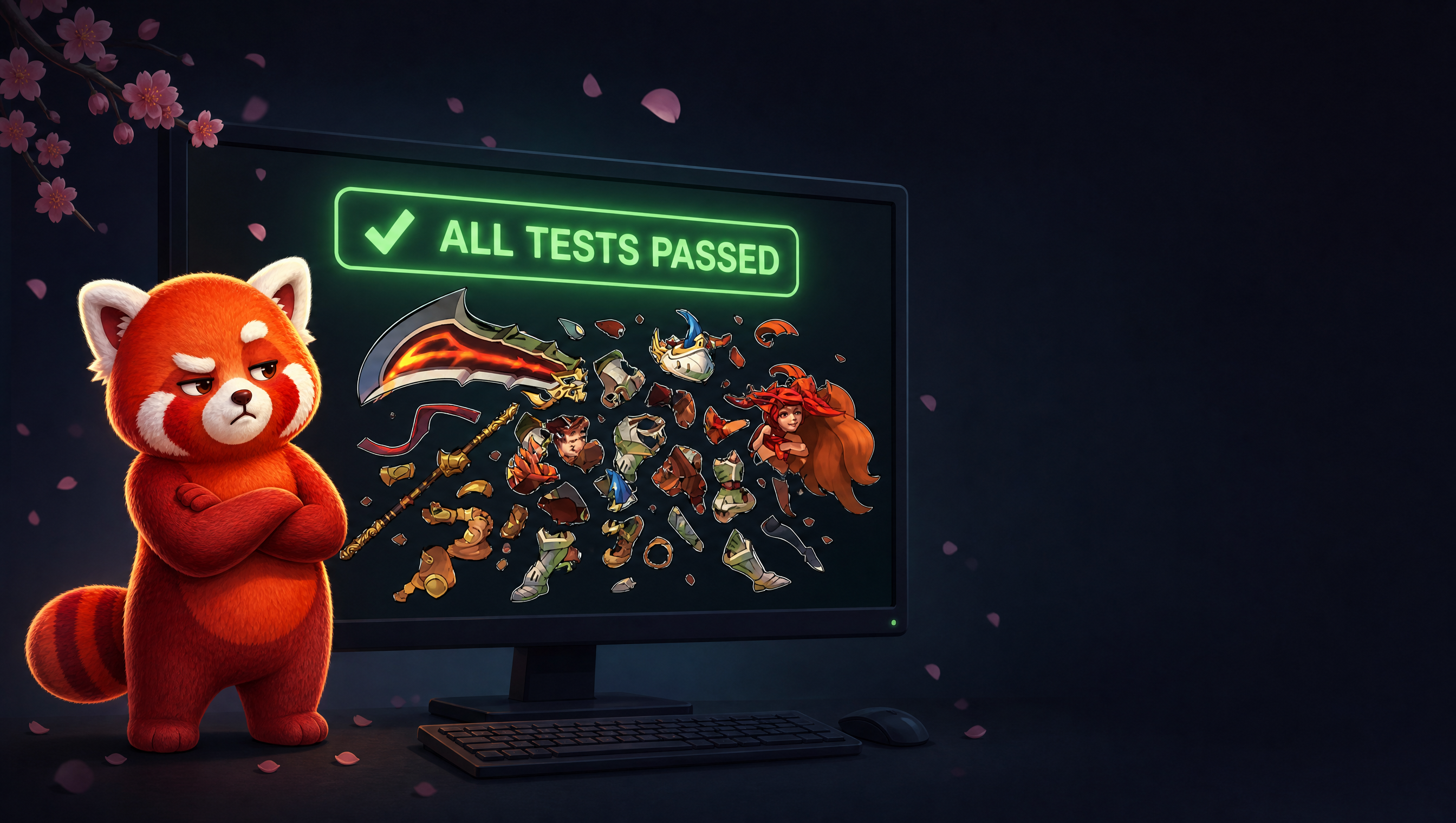
Last time I wrote here, all I had was a 200MB app file and a plan. Pull the dead game apart, get it into a modern engine, and rebuild it one phase at a time.
A couple of big things have happened since.
First, I got the numbers. The game's code was encrypted, locked up so you could see the file but not read what was inside. That's where all the stats and skill formulas live, the stuff that makes the game feel like the game. There's a trick to getting at it (the code briefly unlocks itself in memory while the game runs, and you grab it right then), and it worked. So I have the real balance data now.
Second, I got a battle running. Four real heroes, in the original's own models and animations, fighting with its own formulas, down to the exact frame each hit lands. It plays start to finish and ends in a win. That was the big proof that this whole thing is actually possible.
But the battle isn't what I want to talk about today. The thing that taught me the most was much smaller.
The first thing you see
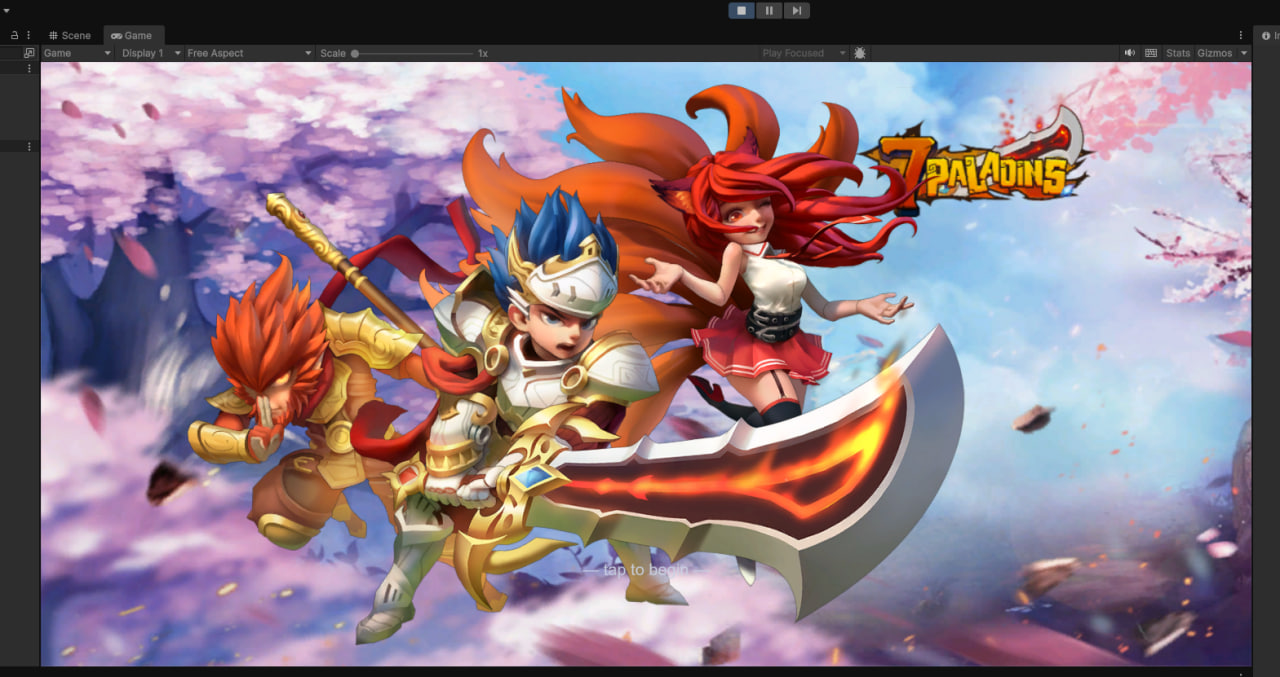
When you open 7 Paladins, before anything else, you get a title screen. Three heroes posed together mid-action. The Monkey King with his staff. A blue-haired knight with a giant flaming sword. A fox girl throwing fireballs. They move a little, gently breathing and swaying, while cherry blossom petals drift past. The logo sits up in the corner.
It's the smallest possible piece of the game. I figured it would take an afternoon.
It took an entire day.
Why one screen was so hard
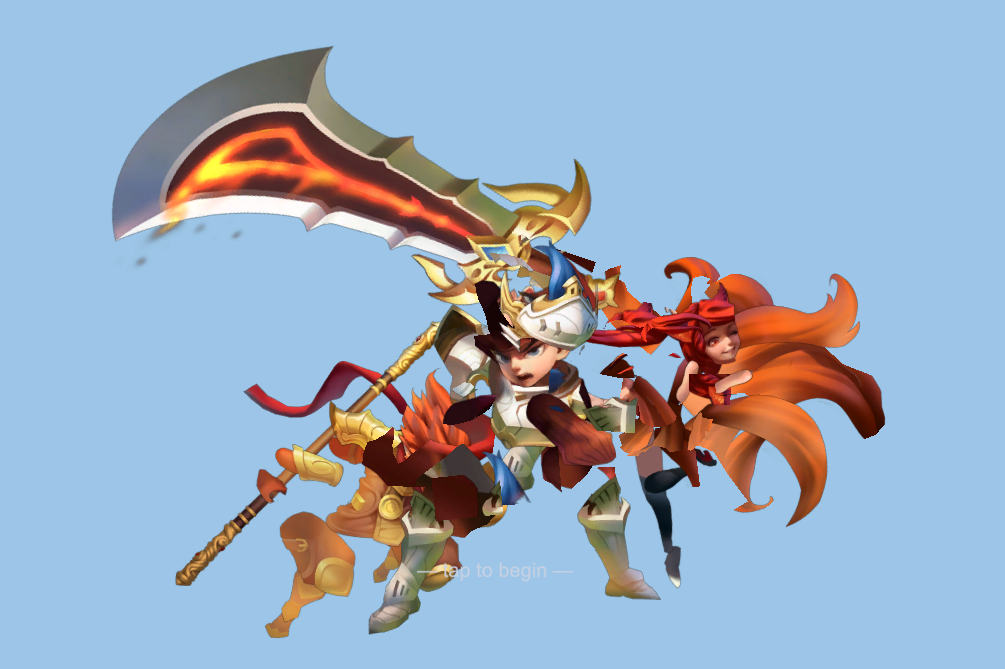
It comes down to age. This game is from 2017, on a version of Unity that's ancient now. And the characters in this first screen are 2D cutouts, not 3D models. Flat pieces, a head, an arm, a tail, each its own little shape, pinned together and animated by moving the pieces around.
The format those pieces are saved in is so old that nothing modern can open it anymore. So to show these three characters at all, I had to build my own little program from scratch, one that reads the old format and puts them back together.
The first time I ran it, the characters came out as an exploded pile of body parts.
Fixing it, piece by piece
So we started debugging, and I want to be straight about how this actually went, because it wasn't one clever AI getting it right first try.
I started with Opus 4.8, and we didn't get far. I kept having to feed it tips on what to fix, and even then the characters came out bugged as hell. So I switched to Fable 5, and it got better almost straight away. It read the old format, cross-checked it against the game's own leftover code, and wrote a whole second version of the reassembler in a different language, just to have something to compare the first one against. Bit by bit, things clicked into place. The Monkey King's mane. The knight's armor. The fox girl's tails.
It still kept missing details, though, so I had to keep guiding it, correcting what looked wrong (there's a good example of exactly that in the next section). Two different models, and plenty of hours of me pointing at things, and I'm fairly sure that if I hadn't been a game dev who knew this exact game, we'd have stayed stuck in that loop.
Every screenshot got a little less broken, until eventually it looked almost right.
Almost.
The part where I was right and the tests were wrong
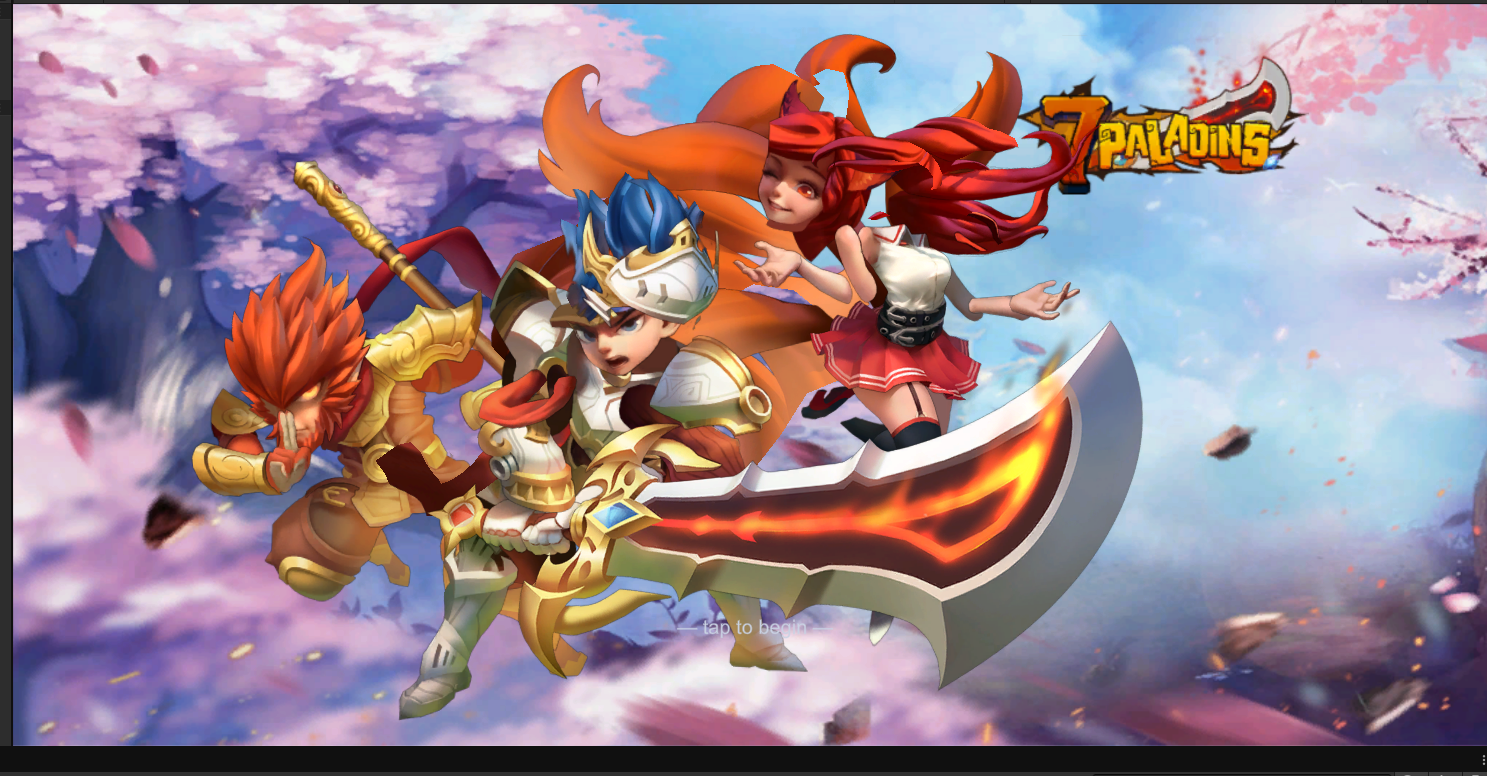
At one point the characters looked nearly perfect, but a few things were still off. The knight's face pointed the wrong way, so his helmet looked like it was on backwards. The fox girl's head looked detached from her body. I kept pointing at the screen going "that's wrong, look at it."
And the AI kept coming back with proof that it wasn't. It built this enormous automated check, over 26,000 separate measurements comparing its work against a reference, and every single one passed. By every test it could run, the picture was correct.
Except it obviously wasn't. I could see it.
The AI had written two versions of the reassembler so they could check each other. But it wrote both of them, from the same wrong idea. So of course they agreed perfectly. They were both wrong in exactly the same way, and all 26,000 checks just kept confidently confirming the same mistake.
The only thing in the whole setup that actually knew what the game was supposed to look like was me. The person who used to play it.
The bug turned out to be a single flipped line. One kind of piece was being read as a mirror image of itself. Fixing that one line fixed all three characters at once. That "the face is wrong but the helmet's right" thing I kept saying turned out to be that exact bug.
What that taught me
This is the version of building with AI that I don't think people say enough.
The AI was incredible at the hard parts. Reverse-engineering a dead file format, writing two whole renderers, generating thousands of tests. Every one of those would have been enough to make me not start this project in the first place (I don't have that much free time haha).
But it will also confidently prove itself right when it's flat wrong. It can be completely thorough and completely wrong at the same time. And when that happens, the thing that saves you is knowing, yourself, what right looks like.
Which is why I can't just hand this over and trust whatever comes back. I have to stay in it. The AI does the work I couldn't do alone, and I catch the things it can't see. That's the real partnership. It does the parts I could never manage by myself, and I stay the one who remembers what we're building and what it's meant to look like.
Anyway
The title screen is alive again, with just a few minor bugs I'll fix after this post.
Three heroes, breathing, in front of a field of falling petals, exactly the way it looked the last time I opened this game, which was eight years ago. And that's the whole reason any of this matters. It's a small thing, just a title screen. But it's the first thing you'd see if you were one of the two people who missed it.
Next up is the actual menu behind it, the real buttons, and then the town you land in when you press start. I'll be back with how that goes. Probably with more screenshots of things exploding first.