My LinkedIn still makes it look as though I work in games. I have been quiet there for so long that this will probably come as a surprise to some people: I have left the games industry.
I still love games. I still intend to make them. They just get to be something I do because I want to now, without the pressure of needing them to pay my bills.
I really did love working in games
I loved my time at Saber Porto.
I started in AI so I could learn the ropes. After that, I became somebody the team could move wherever help was needed.
I ended up helping in several areas, depending on where an extra pair of hands was needed. I got to learn from different departments and work on all sorts of problems. I loved it. I felt useful and I was learning constantly.
I had hoped the experience might become a long-term role. When it ended, I was disappointed and unsure what came next.
I still look back on that time with a lot of gratitude. I learned a great deal and met wonderful people, many of whom became friends I still speak to every day.
The month after
At first, I assumed I would find another studio and continue along the same path. I gave myself a month to think and spoke to people who had spent much longer in the industry than I had.
I already knew about the low pay and the constant possibility of layoffs. I knew hard work did not guarantee security, and I knew companies were already replacing people with AI or preparing to. None of that was news to me.
What I had held on to was the idea that if I worked hard enough and made myself useful, I would be recognised and valued. My own experience, paired with those conversations, made me question whether I wanted to build a career around that hope.
There are good companies and good teams, of course. I simply no longer wanted my future to depend on finding the rare place where dedication would be returned in equal measure.
I had already found another kind of work where that value was much easier to see.
Going back to Funnels Genius
Funnels Genius is the business I run with Pedro. When I stepped away from pursuing games professionally, I went back to it properly and we began focusing on custom AI solutions for businesses.
Our projects have included AI coaching tools and custom systems for bookings, client management and onboarding. The work begins with somebody who has an idea or a frustrating problem in their business. We work out what they actually need and turn it into something they can use.
Pedro trusts my judgement. This matters to me more than I knew how to explain at the beginning of my career. I also work directly with our clients, so I do not have to wonder whether my contribution made a difference. They tell me. Then they come back with another project.
I get nice words and money. Both are good.
We decide what we charge and how we organise our time. I work with my number one fan, and I have the freedom to keep making games without asking them to carry the financial weight of my life.
For the first time, the way I am treated matches the amount of myself I put into the work.
My relationship with AI is complicated
There is a lot about AI that I hate.
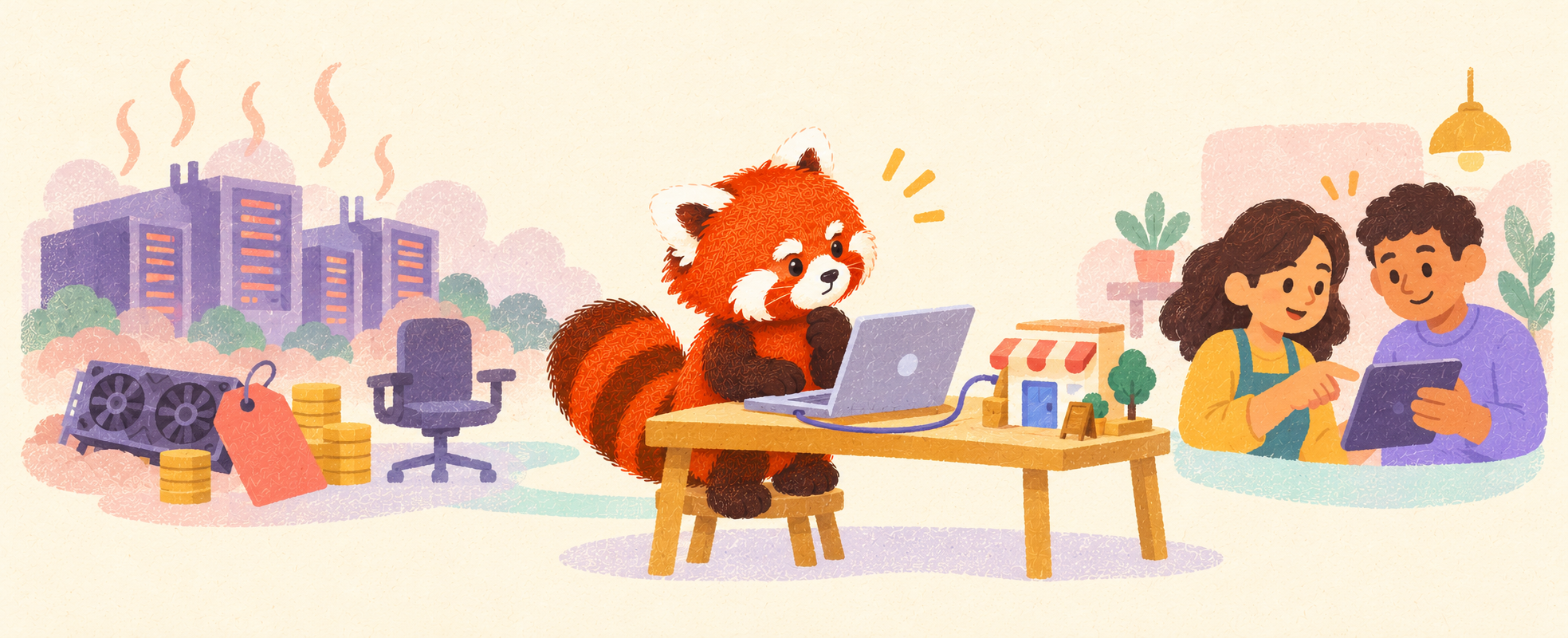
I hate watching people lose their jobs while companies describe the decision as progress. I worry about the environmental cost of the data centres being built to support it. I worry about consumer hardware becoming harder to afford as demand grows. I am also disturbed by what happens when somebody begins treating a chatbot as a person or an authority and becomes psychologically unwell.
Working with AI does not make those concerns disappear. I do not want to become one of those people who sells it as the answer to everything and treats every criticism as fear of change.
I can also see where the money is going. More importantly, I can see what AI makes possible when it is used well.
It can help a small business build a tool around the way it actually works. It can help somebody test an idea that would otherwise remain in a notebook. It can make certain kinds of development more accessible to people who never thought they could build anything.
That does not cancel out the harm. It means I have chosen the part of this technology I want to work on: helping people make their ideas real, while staying honest about the problems around it.
I know that position may be controversial with people who followed me because of games. I would rather explain the contradiction than hide it.
Apparently I needed more things to do
Building for clients is only one part of my life now.
Pedro and I also have a course and coaching community where I teach more than 50 students how to think like developers when they use AI. That includes breaking a project into smaller problems, testing what the AI produces and learning how to catch mistakes. I also teach development concepts and practical tools such as Git.
The point is not to memorise one magical prompt. I want them to understand enough to make decisions about what they are building.
Pedro and I are starting a podcast too. We will be talking about AI myths and explaining what the language around it actually means, because there is a lot of noise and very little patient explanation.
I have also started writing on my personal website. The blog gives me somewhere to talk about building software, games, AI and the parts of all three that annoy me. Based on this list, I have apparently responded to gaining more control over my schedule by filling every available hour again.
So this is my overdue update. I am building custom AI solutions, teaching and writing. The podcast is coming. Games are staying in my life on my own terms.
If you have an idea you want to turn into something real with AI, contact me. I would love to hear what you are trying to make.